


| Quantity: | |
|---|---|
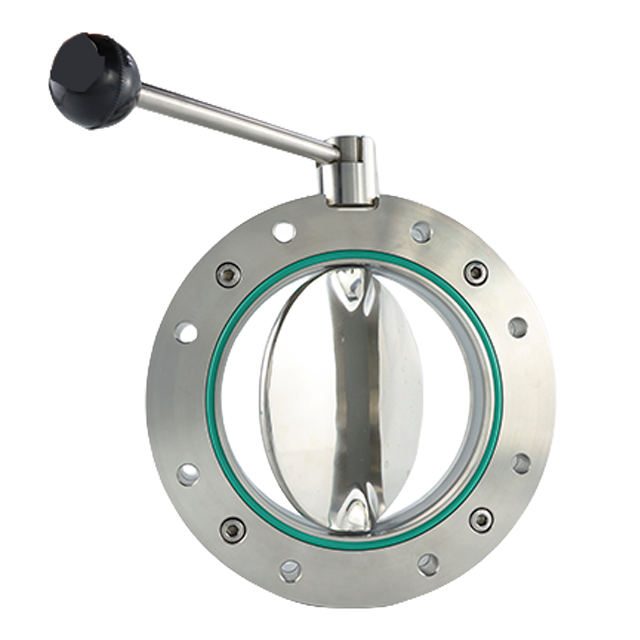
A Sanitary Grade Flow Regulator and Corrosion-resistant Pressure Reducing Valve is a dual-function hygienic valve designed to precisely control flow while maintaining stable downstream pressure. It ensures clean, safe, and reliable operation in systems handling corrosive or sensitive fluids
JONENG


Sanitary Grade Flow Regulator And Corrosion-resistant Pressure Reducing Valve
A Sanitary Grade Flow Regulator and Corrosion-resistant Pressure Reducing Valve is a dual-function hygienic valve designed to precisely control flow while maintaining stable downstream pressure. It ensures clean, safe, and reliable operation in systems handling corrosive or sensitive fluids
Working Principles

The Sanitary Grade Flow Regulator and Corrosion-resistant Pressure Reducing Valve operates by combining a throttling mechanism with an internal pressure control system. As fluid enters the valve, the regulating element adjusts its opening to maintain a constant flow rate, compensating for upstream pressure fluctuations. At the same time, the pressure-reducing section uses a spring-loaded or diaphragm-controlled assembly to automatically limit downstream pressure to a preset value. This dual-action operation ensures stable, hygienic fluid handling with smooth transitions, preventing pressure surges, protecting equipment, and maintaining consistent process conditions in sanitary applications
Specification Chart
Material | AISI304, AISI316L |
Size | 1" to 2" |
Seals | PTFE, EPDM, Viton |
End connections | Sanitary clamp |
Maximum pressure | 0 to 10 bar |
Maximum temperature | -15 °C to 148 °C |
Features
Designed with a hygienic flow-control structure that maintains accurate and stable flow rates, ensuring reliable performance even when inlet pressure changes.
Uses corrosion-resistant stainless steel materials that withstand aggressive cleaning agents and process media, enhancing durability in sanitary environments.
Features a smooth, crevice-free internal surface to reduce contamination risks and support strict hygiene requirements in regulated industries.
Incorporates an adjustable pressure-reducing mechanism that stabilizes downstream pressure, protecting equipment from overload and pressure spikes.
Built with a compact, easy-to-maintain configuration that simplifies installation, cleaning, and system integration in sanitary processing lines
Application
This valve is widely used in sanitary processing fields that require stable flow and controlled pressure. It is commonly applied in dairy production lines to maintain consistent flow during pasteurization, in beverage systems to regulate filling pressures, and in biopharmaceutical equipment to protect sensitive instruments from pressure fluctuations. It also supports clean-in-place pipelines where hygienic control and corrosion resistance are essential for safe and reliable operation
Working Principles
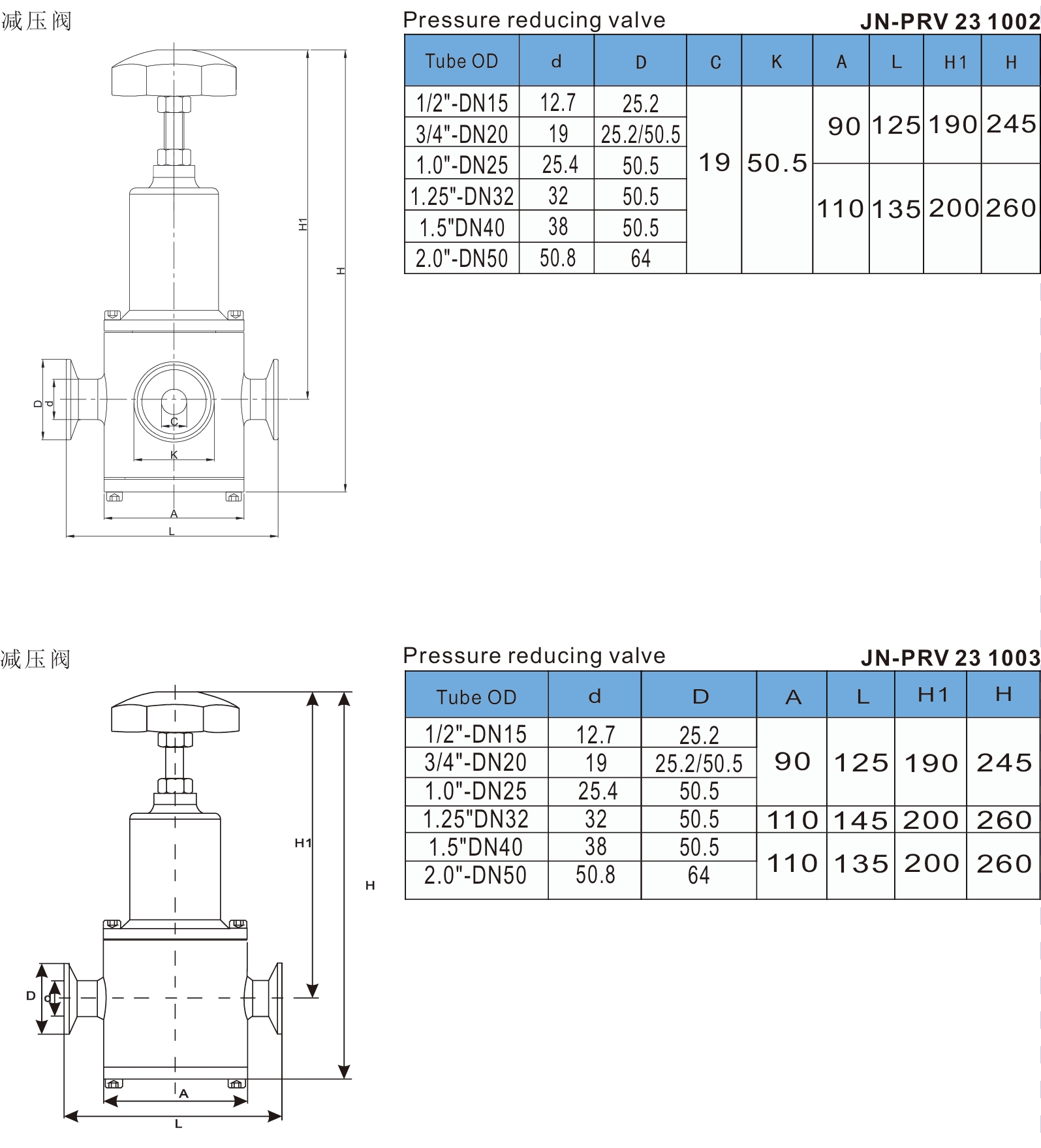
The Sanitary Grade Flow Regulator and Corrosion-resistant Pressure Reducing Valve operates by combining a throttling mechanism with an internal pressure control system. As fluid enters the valve, the regulating element adjusts its opening to maintain a constant flow rate, compensating for upstream pressure fluctuations. At the same time, the pressure-reducing section uses a spring-loaded or diaphragm-controlled assembly to automatically limit downstream pressure to a preset value. This dual-action operation ensures stable, hygienic fluid handling with smooth transitions, preventing pressure surges, protecting equipment, and maintaining consistent process conditions in sanitary applications
Specification Chart
Material | AISI304, AISI316L |
Size | 1" to 2" |
Seals | PTFE, EPDM, Viton |
End connections | Sanitary clamp |
Maximum pressure | 0 to 10 bar |
Maximum temperature | -15 °C to 148 °C |
Features
Designed with a hygienic flow-control structure that maintains accurate and stable flow rates, ensuring reliable performance even when inlet pressure changes.
Uses corrosion-resistant stainless steel materials that withstand aggressive cleaning agents and process media, enhancing durability in sanitary environments.
Features a smooth, crevice-free internal surface to reduce contamination risks and support strict hygiene requirements in regulated industries.
Incorporates an adjustable pressure-reducing mechanism that stabilizes downstream pressure, protecting equipment from overload and pressure spikes.
Built with a compact, easy-to-maintain configuration that simplifies installation, cleaning, and system integration in sanitary processing lines
Application
This valve is widely used in sanitary processing fields that require stable flow and controlled pressure. It is commonly applied in dairy production lines to maintain consistent flow during pasteurization, in beverage systems to regulate filling pressures, and in biopharmaceutical equipment to protect sensitive instruments from pressure fluctuations. It also supports clean-in-place pipelines where hygienic control and corrosion resistance are essential for safe and reliable operation.