Case Studies of Coastal Cities
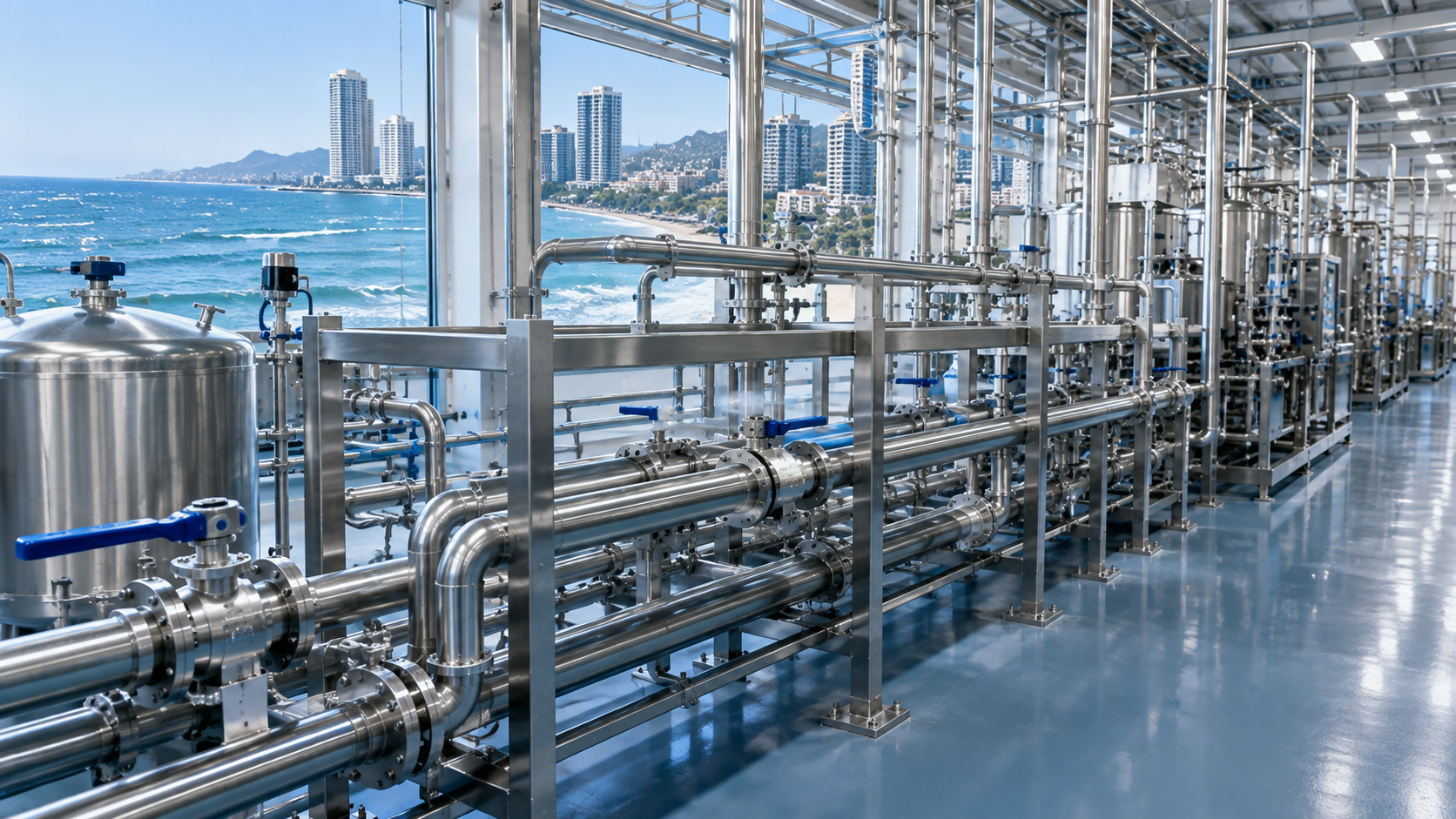
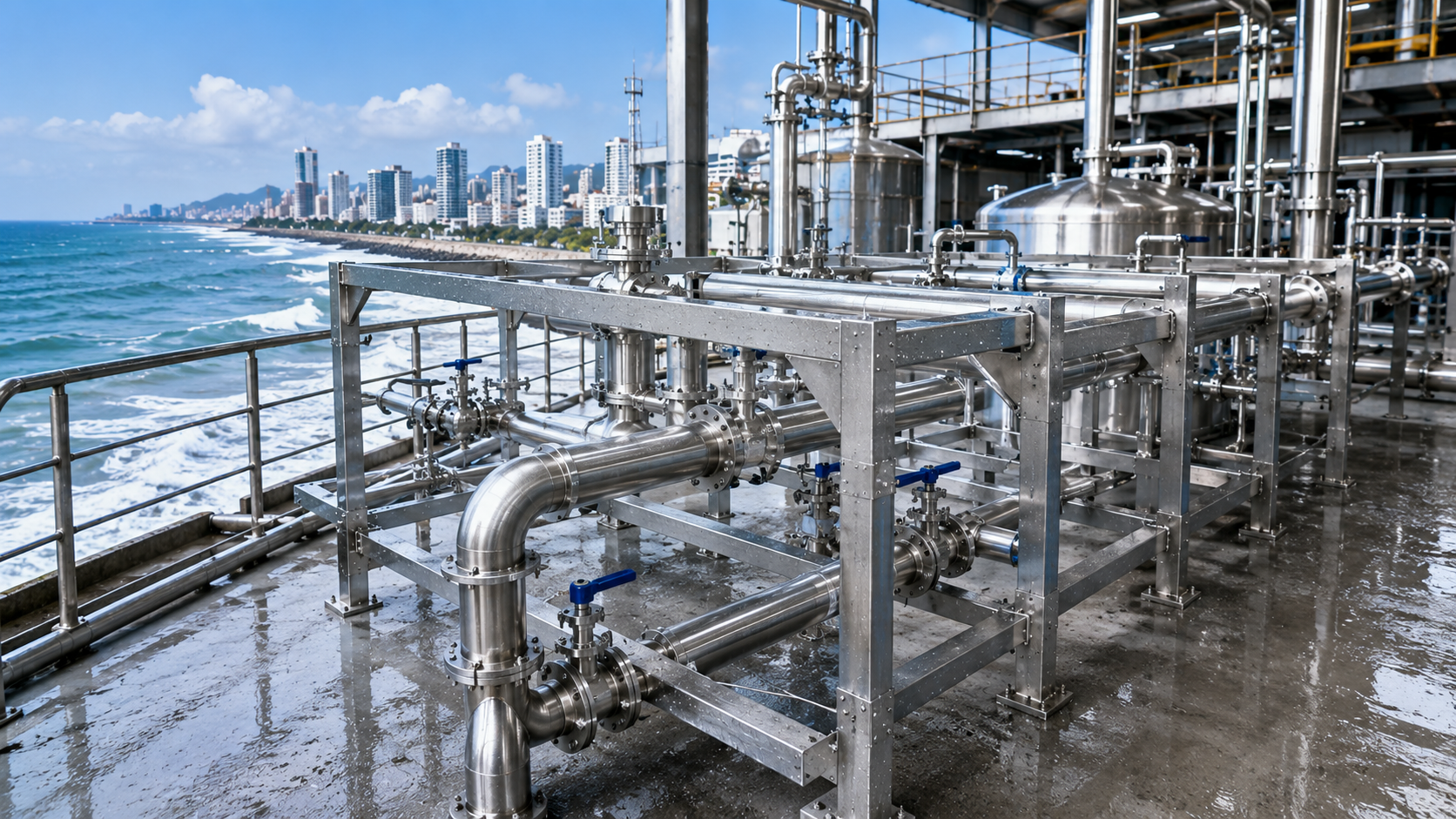
The dairy industry maintains extremely strict standards for hygiene and cleanliness. Every stage of production—from the receipt and storage of raw milk to pasteurization, homogenization, fermentation, and filling—relies on stainless steel piping systems for support and interconnection. Structural components such as pipe supports, equipment mounts, and platform frameworks serve as the "skeleton" of the production line, performing the vital functions of securing piping, supporting equipment, and ensuring stable operations.
One of our Australian clients—a dairy processing company—had long been plagued by a critical issue in its daily plant operations.
Pain Point: Rapid Corrosion of 304 Stainless Steel Supports in a Coastal, High-Salinity Environment
The "stainless" nature of stainless steel stems from a thin, dense, chromium-rich chromium oxide (Cr₂O₃) passivation layer on its surface. This layer acts as a physical barrier, shielding the metal from corrosive agents like air and moisture. However, this protective film is not impenetrable.
Located near the coast, the dairy plant was constantly exposed to airborne salt spray rich in chloride ions. Small in size and highly polar, chloride ions easily penetrate the passivation layer; they adsorb onto the surface, breach the film, and react with the metal to form soluble chlorides. This process causes localized dissolution of the passivation layer, resulting in the formation of microscopic corrosion pits (pitting corrosion).
Less than two years after commissioning, the once-lustrous surfaces of the supports began to show brown rust spots and pitting. The corrosion was not merely an aesthetic issue; during third-party food safety audits, the rusted supports were flagged as a non-compliance item requiring rectification due to "unclean equipment surfaces." Rust particles could flake off and fall into open storage tanks or onto conveyor belts below, posing a risk of foreign object contamination. Meanwhile, as the pitting deepened, the effective load-bearing cross-section of the supports diminished, leading to deformation in some areas.
Solution: Material Upgrade—Sandblasting and Pickling
Faced with a coastal environment characterized by high salt spray, the dairy plant had initially used 304 stainless steel supports, which suffered from extensive rusting and pitting within less than two years of operation. Rust particles pose a risk of foreign object contamination, while pitting corrosion progressively compromises the bracket's load-bearing cross-section; furthermore, such issues are flagged as "unclean equipment surfaces" requiring corrective action during third-party food safety audits.
Our solution does not involve changing the material itself; instead, we employ a comprehensive surface treatment process—combining abrasive blasting pretreatment with pickling and passivation—to significantly enhance corrosion resistance while retaining the 304 stainless steel grade. Abrasive blasting thoroughly removes surface scale, oil, welding spatter, and degraded passivation layers; pickling dissolves the chromium-depleted surface layer to enrich chromium content; and passivation reconstructs a dense chromium-oxide protective film. These three interconnected steps—executed according to ASTM A380 standards and verified via the Blue Point Test—extend the bracket's stable service life in coastal salt-spray environments from a mere two years to over five years. This results in a 70% reduction in annual maintenance costs and ensures successful passage of food safety audits.
Why choose Wenzhou Zhuoneng Valve Co., Ltd.?
We never view brackets merely as "structural components"—in coastal salt-spray environments, every bracket serves as a critical line of defense for food safety and production line stability. We deeply understand how chloride ions damage stainless steel passivation films and recognize that the notion "304 stainless steel inevitably rusts" is not a material flaw, but rather the result of inadequate surface treatment. Abrasive blasting, pickling, and passivation are not simple rust-removal tasks; they constitute a systematic process requiring precise control over material properties, chemical formulations, and operational parameters. Our strength lies in our refusal to accept a "good enough" attitude toward surface treatment. From the selection of blasting media and air pressure control to the formulation and reaction time of pickling solutions, and through to post-passivation rinsing and drying, every step strictly adheres to ASTM A380 international standards. This ensures that every bracket develops a truly dense, uniform, and chromium-rich passivation film. We deliver more than just brackets; we deliver the confidence that our products can withstand salt-spray environments. This allows our clients to eliminate frequent maintenance due to rust and avoid the anxiety of audit-driven corrective actions, enabling them to focus their energy on dairy production itself.
Ensure your coastal dairy plant no longer faces frequent bracket replacements due to rust.