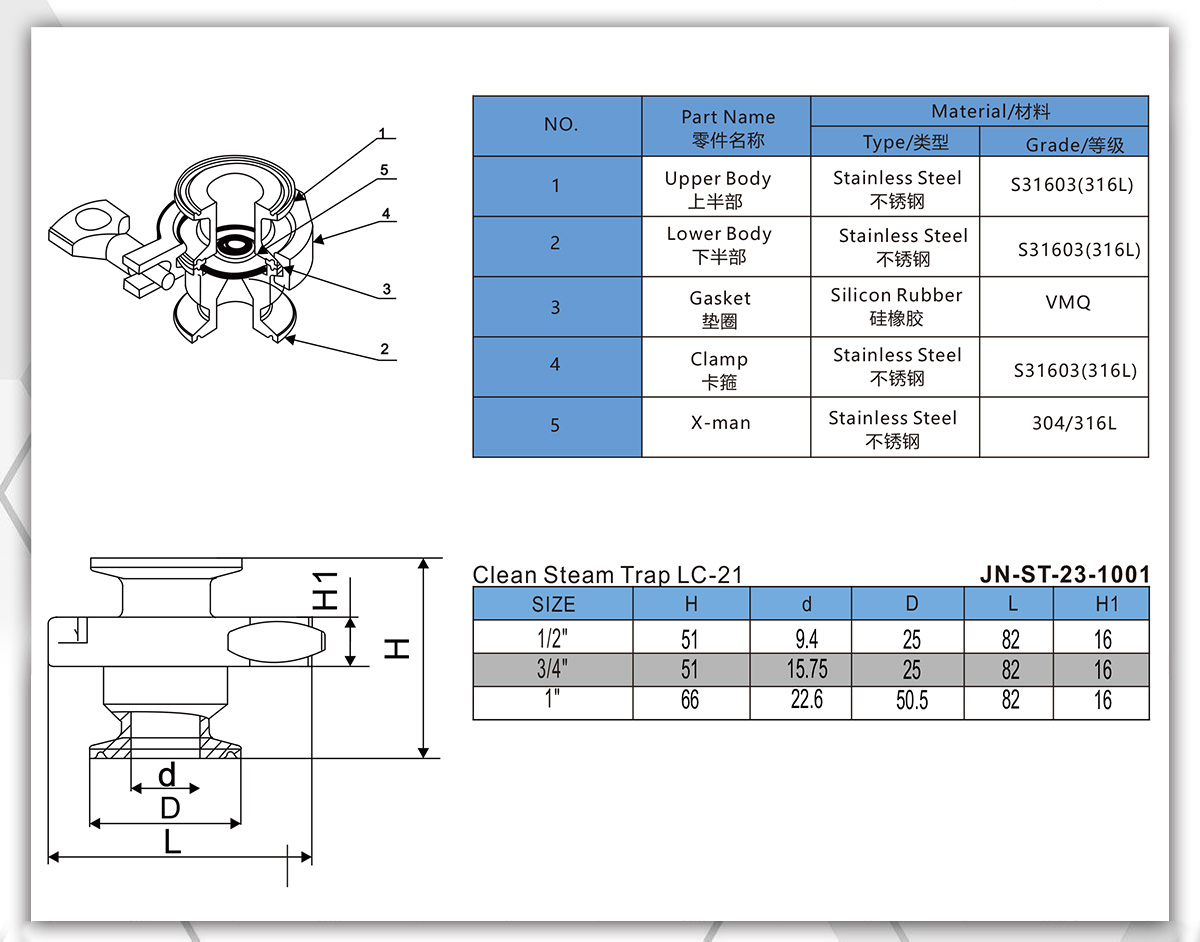
STAINLESS STEEL Ball Float Armstrong Wireless Monitor Valve Steam Trap
steam trap are available in threaded and flanged types, with various sizes and pressure ratings. They are high-temperature and corrosion-resistant, offer sensitive opening and closing, and provide stable drainage, making them suitable for steam systems.
Working Principles

This steam trap utilizes the density difference between condensate and steam for automatic drainage. When condensate enters the valve body, the rising liquid level causes the float to rise, opening the valve seat via a connecting rod and continuously draining the condensate. When steam arrives, the float descends, closing the valve to prevent steam leakage. The built-in wireless monitoring device can collect real-time operating data such as temperature and opening status, and transmit it remotely to assess drainage performance and system operating conditions, enabling energy saving and optimized maintenance management.
Stainless Steel Steam Ttap Specification Chart
| Body Material | SS304 / SS316L Stainless Steel |
| Connection Type | Clamp / Threaded / Welded |
| Nominal Size | DN15 – DN50 (1/2" – 2") |
| Design Pressure | PN16 / PN25 / PN40 |
| Working Pressure | 16 – 40 bar |
| Working Temperature | 220 – 400°C |
| Applicable Media | Saturated Steam, Condensate |
| Surface Finish | Ra ≤ 0.8 μm |
| Standards | DIN / SMS / ISO / 3A |
Features
Combines inverted bucket and thermostatic mechanisms to ensure reliable condensate discharge while preventing live steam loss, maintaining stable operation under fluctuating pressure and load conditions in steam systems.
Manufactured from stainless steel for excellent corrosion resistance, high temperature tolerance, and long service life, making it suitable for hygienic, chemical, and industrial steam applications.
Designed with a 3/4 inch connection size, offering easy integration into standard steam lines while supporting efficient condensate removal and consistent thermal performance.
Provides accurate testing and monitoring capability, allowing operators to evaluate trap performance during operation without system shutdown, improving maintenance efficiency and system reliability.
Features a compact and robust internal structure that resists water hammer and dirt accumulation, ensuring stable operation and reduced risk of blockage or mechanical failure.
Application
This steam trap is widely used in the food and beverage, pharmaceutical, bioengineering, fine chemical, and electronics manufacturing industries. For example, in food cooking and sterilization systems, it can stably discharge condensate and monitor the operating status in real time via wireless monitoring; in pharmaceutical clean steam systems, it helps ensure heat exchange efficiency and energy consumption management, and improves system safety and reliability.