STAINLESS STEEL Thermostatic Float Valve Manufacturer 3/4" Testing Steam Trap
steam trap are available in threaded and flanged types, with various sizes and pressure ratings. They are high-temperature and corrosion-resistant, offer sensitive opening and closing, and provide stable drainage, making them suitable for steam systems.
Working Principles

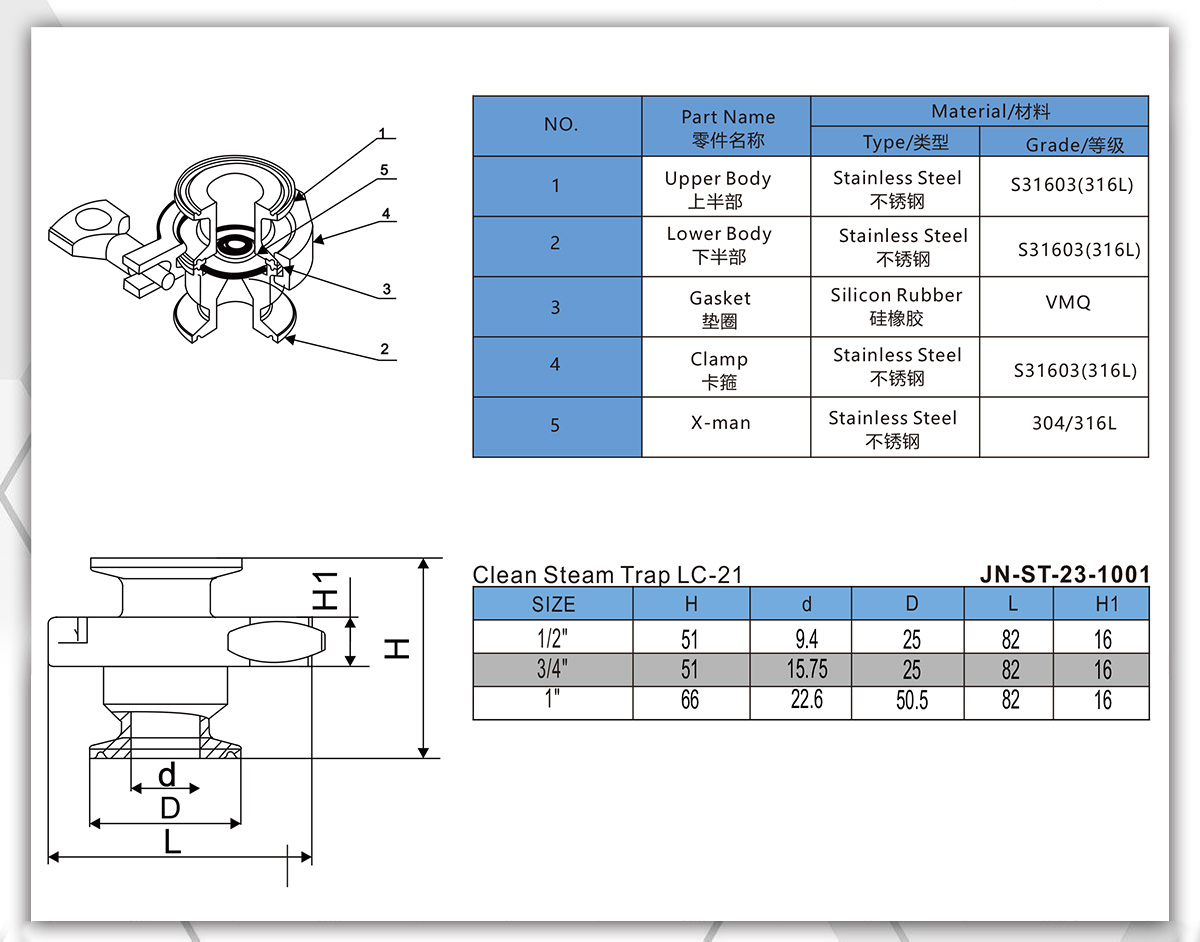
This steam trap, uses a float and a temperature control element to remove condensate from steam systems. When steam enters the valve body, the float rises and closes the valve to prevent steam leakage. When condensate accumulates, the float descends, opening the valve to drain the condensate. Simultaneously, the temperature control element can release air or non-condensable gases. This working principle ensures continuous and efficient operation of the steam system, avoids water hammer and condensate buildup, optimizes heat utilization, and features a simple structure for easy maintenance and testing.
Stainless Steel Steam Ttap Specification Chart
| Body Material | SS304 / SS316L Stainless Steel |
| Connection Type | Clamp / Threaded / Welded |
| Nominal Size | DN15 – DN50 (1/2" – 2") |
| Design Pressure | PN16 / PN25 / PN40 |
| Working Pressure | 16 – 40 bar |
| Working Temperature | 220 – 400°C |
| Applicable Media | Saturated Steam, Condensate |
| Surface Finish | Ra ≤ 0.8 μm |
| Standards | DIN / SMS / ISO / 3A |
Features
Stainless steel construction provides excellent corrosion resistance and durability in testing steam and condensate discharge applications.
Thermostatic float mechanism enables continuous condensate removal while automatically venting air and non-condensable gases.
3/4 inch compact design allows easy installation in limited space testing and pilot steam systems.
Stable and accurate response to condensate level changes ensures efficient heat transfer and reduced steam energy loss.
Simple internal structure supports reliable operation, easy inspection, and convenient maintenance during routine testing.
Application
The steam trap is widely used in chemical, power, oil refining, textile, and district heating systems. For example, in steam tracing pipelines of chemical plants, it continuously drains condensate to prevent water accumulation and water hammer; in power plant steam transmission systems, it ensures long-term stable equipment operation and reduces energy consumption.