



| Quantity: | |
|---|---|
JONENG


steam traps are available in balanced pressure type and capsule type, adaptable to different pressure ratings. Specifications cover various connection methods, and materials include SS304 and SS316. They feature quick start-up, good venting, corrosion resistance, energy saving, and stable operation.

This steam trap, manufactured by a manufacturer, achieves automatic drainage through the coordinated operation of a float and a valve. When condensate enters the valve body, the rising liquid level causes the float to rise, opening the valve and expelling the condensate and air. When steam reaches the valve body, the float descends, closing the valve to prevent steam leakage. Designed for testing and short-term operation, this valve allows monitoring of drainage performance without affecting system stability, ensuring the thermal efficiency of the steam system. It also features a compact structure, easy installation and maintenance, and is suitable for high-temperature, high-pressure steam pipelines.
| Body Material | SS304 / SS316L Stainless Steel |
| Connection Type | Clamp / Threaded / Welded |
| Nominal Size | DN15 – DN50 (1/2" – 2") |
| Design Pressure | PN16 / PN25 / PN40 |
| Working Pressure | 16 – 40 bar |
| Working Temperature | 220 – 400°C |
| Applicable Media | Saturated Steam, Condensate |
| Surface Finish | Ra ≤ 0.8 μm |
| Standards | DIN / SMS / ISO / 3A |
Constructed from high-quality SS317 stainless steel, providing excellent corrosion resistance and durability in high-temperature and high-pressure steam environments.
Float valve mechanism ensures precise condensate discharge and prevents live steam loss during operation.
Designed for testing and short-term monitoring, allowing accurate evaluation of steam system performance.
Compact and robust structure facilitates easy installation, maintenance, and integration into existing piping systems.
Simple internal design reduces wear, ensures reliable operation, and minimizes maintenance requirements in industrial applications
Stainless steel ball float type steam traps are widely used in laboratory pipelines for food processing, pharmaceuticals, chemicals, and fine chemicals. For example, in laboratory steam tracing pipelines or small production lines, they are used to test the drainage efficiency of steam systems, drain condensate, prevent water accumulation in pipelines, and facilitate the observation and verification of their drainage performance.
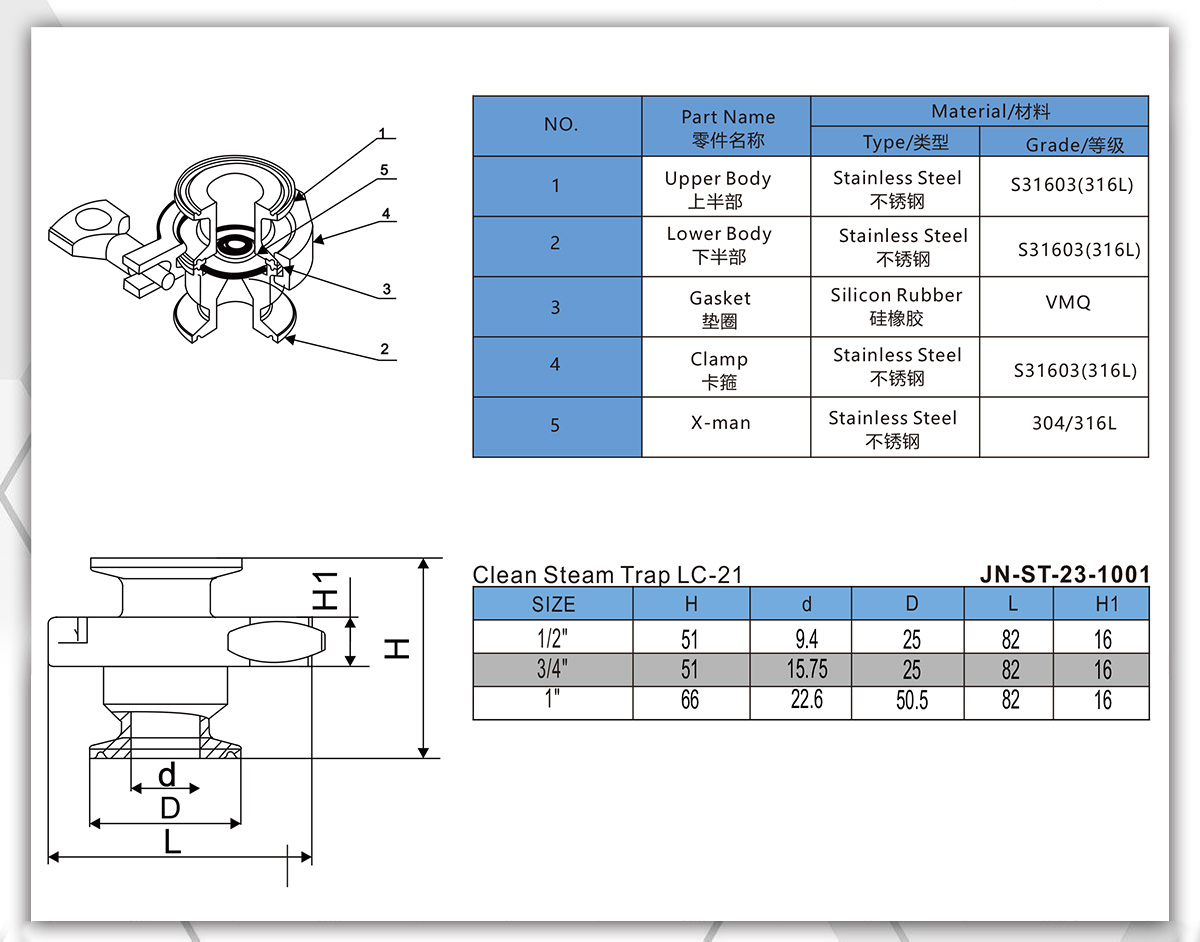
Working Principles
This steam trap, manufactured by a manufacturer, achieves automatic drainage through the coordinated operation of a float and a valve. When condensate enters the valve body, the rising liquid level causes the float to rise, opening the valve and expelling the condensate and air. When steam reaches the valve body, the float descends, closing the valve to prevent steam leakage. Designed for testing and short-term operation, this valve allows monitoring of drainage performance without affecting system stability, ensuring the thermal efficiency of the steam system. It also features a compact structure, easy installation and maintenance, and is suitable for high-temperature, high-pressure steam pipelines.
Feature and Specification
| Body Material | SS304 / SS316L Stainless Steel |
| Connection Type | Clamp / Threaded / Welded |
| Nominal Size | DN15 – DN50 (1/2" – 2") |
| Design Pressure | PN16 / PN25 / PN40 |
| Working Pressure | 16 – 40 bar |
| Working Temperature | 220 – 400°C |
| Applicable Media | Saturated Steam, Condensate |
| Surface Finish | Ra ≤ 0.8 μm |
| Standards | DIN / SMS / ISO / 3A |
Features
Constructed from high-quality SS317 stainless steel, providing excellent corrosion resistance and durability in high-temperature and high-pressure steam environments.
Float valve mechanism ensures precise condensate discharge and prevents live steam loss during operation.
Designed for testing and short-term monitoring, allowing accurate evaluation of steam system performance.
Compact and robust structure facilitates easy installation, maintenance, and integration into existing piping systems.
Simple internal design reduces wear, ensures reliable operation, and minimizes maintenance requirements in industrial applications
Application
steam traps are widely used in the food and beverage, pharmaceutical, dairy, chemical, and paper industries. For example, in steam jacketed pipelines in pharmaceutical workshops, they are used to drain condensate, ensuring stable temperatures in reactors and heat exchangers, while also facilitating online replacement of internal components and minimizing downtime.