



| Quantity: | |
|---|---|
JONENG


steam traps are available in balanced pressure type and capsule type, adaptable to different pressure ratings. Specifications cover various connection methods, and materials include SS304 and SS316. They feature quick start-up, good venting, corrosion resistance, energy saving, and stable operation.

The stainless steel steam trap achieves automatic drainage through a temperature-controlled element. When condensate forms in the steam pipe, the element senses that the temperature is below the steam saturation temperature, and the valve opens to release the condensate and air. As the steam temperature approaches saturation, the element expands due to heat, closing the valve to prevent steam leakage. This cycle continues, achieving continuous and efficient drainage, ensuring the thermal efficiency of the steam system, reducing water hammer and energy consumption, while its compact design allows for quick installation and maintenance.
| Body Material | SS304 / SS316L Stainless Steel |
| Connection Type | Clamp / Threaded / Welded |
| Nominal Size | DN15 – DN50 (1/2" – 2") |
| Design Pressure | PN16 / PN25 / PN40 |
| Working Pressure | 16 – 40 bar |
| Working Temperature | 220 – 400°C |
| Applicable Media | Saturated Steam, Condensate |
| Surface Finish | Ra ≤ 0.8 μm |
| Standards | DIN / SMS / ISO / 3A |
Made from SS317 stainless steel, offering superior corrosion resistance and strength for long-term operation in high-temperature and high-pressure steam systems.
Thermodynamic disc design provides rapid response to changes in steam and condensate conditions, ensuring efficient condensate discharge while minimizing live steam loss.
Integrated wireless monitoring enables real-time tracking of temperature, discharge cycles, and operating status for predictive maintenance and energy management.
Compact and rugged structure supports stable performance under fluctuating loads, including superheated steam and intermittent condensate flow conditions.
Simple internal construction with few moving parts reduces wear, eases maintenance, and ensures reliable operation in demanding industrial environments
This steam trap are widely used in the food and beverage, pharmaceutical, dairy, chemical, and brewing industries. For example, in dairy pasteurization pipelines, they can promptly drain condensate to ensure uniform heating of the steam jacket; in chemical reactor steam systems, they can stably drain water, improve heat exchange efficiency, and ensure process stability.
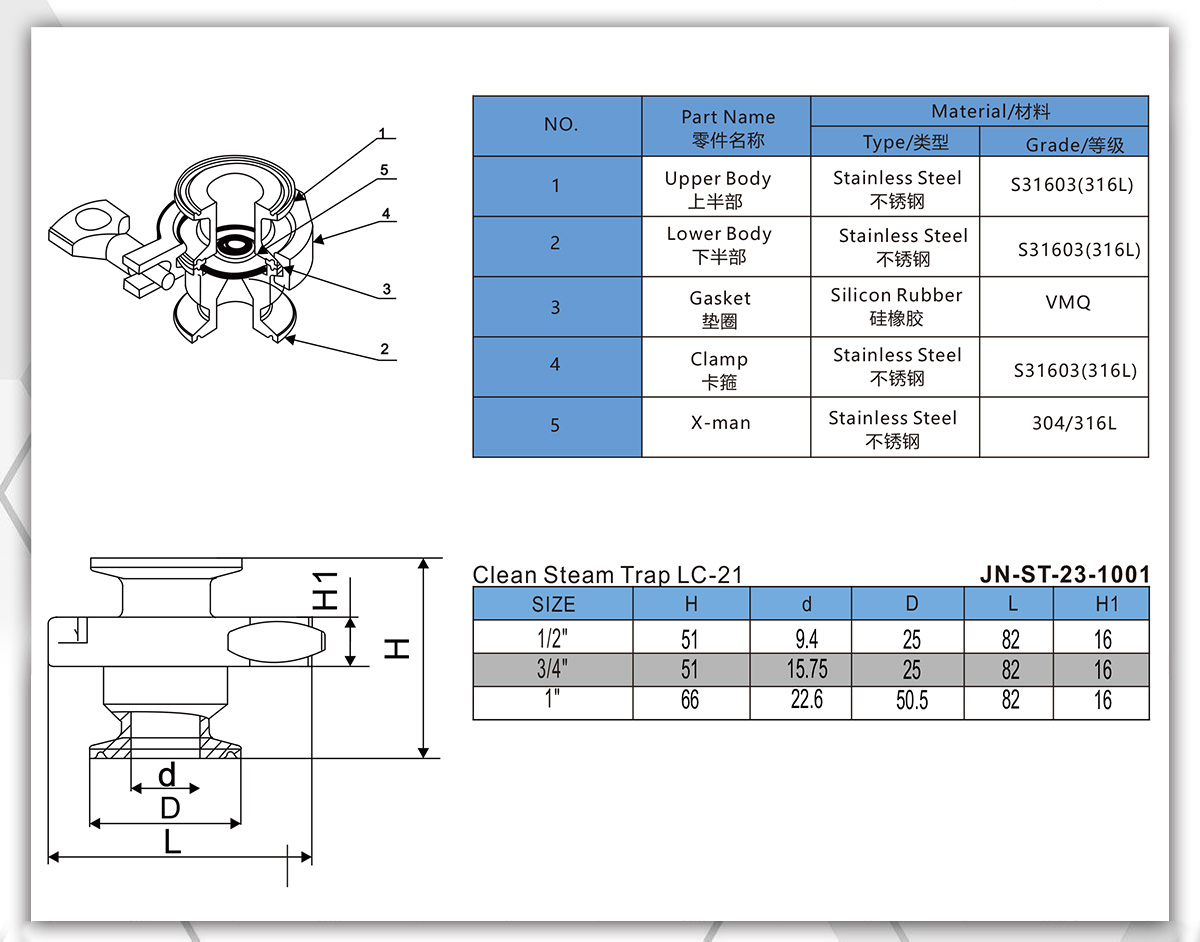
Working Principles
The stainless steel steam trap achieves automatic drainage through a temperature-controlled element. When condensate forms in the steam pipe, the element senses that the temperature is below the steam saturation temperature, and the valve opens to release the condensate and air. As the steam temperature approaches saturation, the element expands due to heat, closing the valve to prevent steam leakage. This cycle continues, achieving continuous and efficient drainage, ensuring the thermal efficiency of the steam system, reducing water hammer and energy consumption, while its compact design allows for quick installation and maintenance.
Feature and Specification
| Body Material | SS304 / SS316L Stainless Steel |
| Connection Type | Clamp / Threaded / Welded |
| Nominal Size | DN15 – DN50 (1/2" – 2") |
| Design Pressure | PN16 / PN25 / PN40 |
| Working Pressure | 16 – 40 bar |
| Working Temperature | 220 – 400°C |
| Applicable Media | Saturated Steam, Condensate |
| Surface Finish | Ra ≤ 0.8 μm |
| Standards | DIN / SMS / ISO / 3A |
Features
Made from SS317 stainless steel, offering superior corrosion resistance and strength for long-term operation in high-temperature and high-pressure steam systems.
Thermodynamic disc design provides rapid response to changes in steam and condensate conditions, ensuring efficient condensate discharge while minimizing live steam loss.
Integrated wireless monitoring enables real-time tracking of temperature, discharge cycles, and operating status for predictive maintenance and energy management.
Compact and rugged structure supports stable performance under fluctuating loads, including superheated steam and intermittent condensate flow conditions.
Simple internal construction with few moving parts reduces wear, eases maintenance, and ensures reliable operation in demanding industrial environments
Application
This steam trap are widely used in the food and beverage, pharmaceutical, dairy, chemical, and brewing industries. For example, in dairy pasteurization pipelines, they can promptly drain condensate to ensure uniform heating of the steam jacket; in chemical reactor steam systems, they can stably drain water, improve heat exchange efficiency, and ensure process stability.