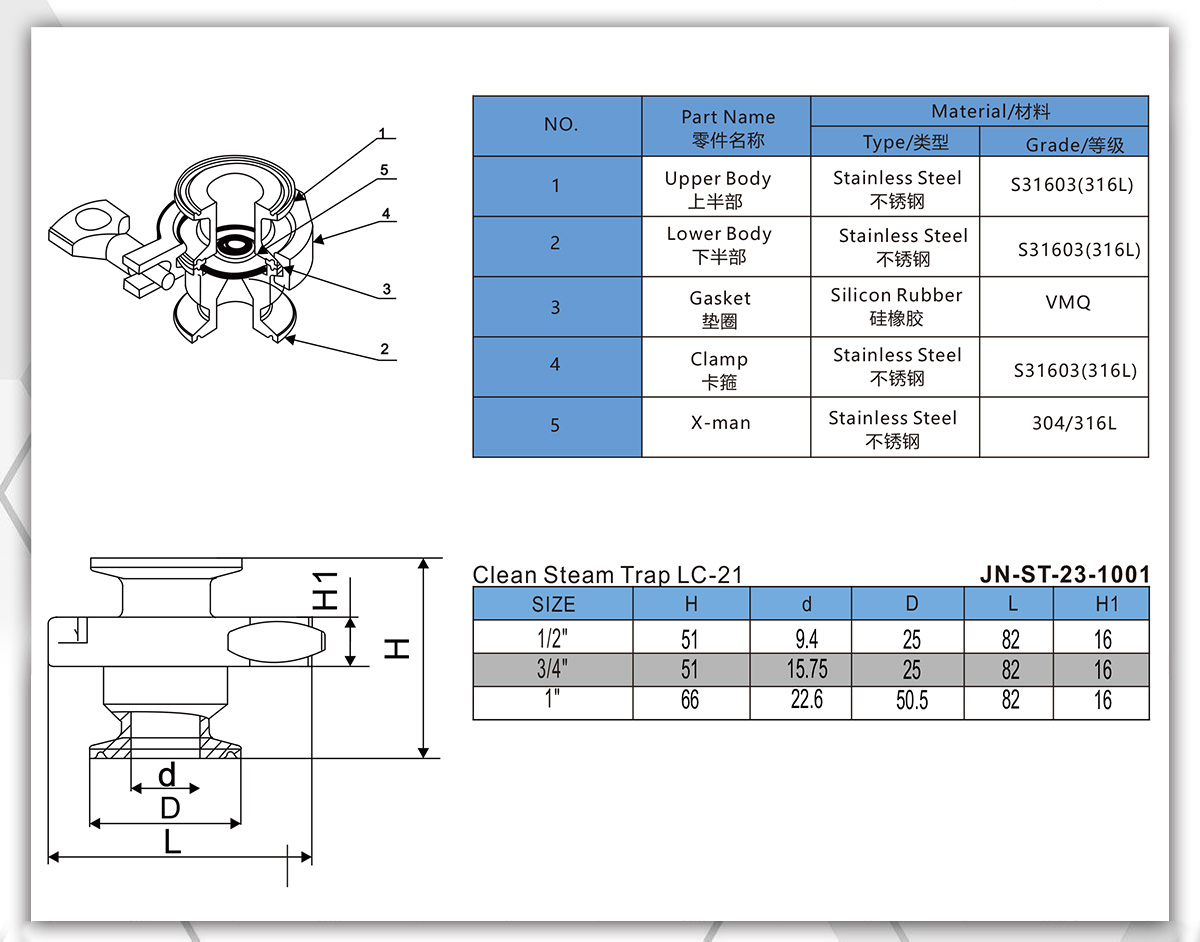
STAINLESS STEEL Inverted Bucket Superheated Monitor Steam Trap
steam traps are available in balanced pressure type and capsule type, adaptable to different pressure ratings. Specifications cover various connection methods, and materials include SS304 and SS316. They feature quick start-up, good venting, corrosion resistance, energy saving, and stable operation.
Working Principles

The stainless steel steam trap automatically opens and closes by utilizing the buoyancy changes of the inverted bucket in the steam and condensate. When condensate enters the valve body, the inverted bucket loses buoyancy and sinks, opening the valve to promptly discharge condensate and non-condensable gases. When superheated steam enters, a stable steam layer forms inside the inverted bucket, generating buoyancy, rising and pushing the valve closed to prevent steam leakage. As the steam gradually condenses, the buoyancy inside the bucket decreases, and the valve reopens. The steam trap achieves efficient drainage through its cyclical operation and provides real-time feedback on its operating status through monitoring functions, making it suitable for high-temperature superheated steam systems.
Stainless Steel Steam Ttap Specification Chart
| Body Material | SS304 / SS316L Stainless Steel |
| Connection Type | Clamp / Threaded / Welded |
| Nominal Size | DN15 – DN50 (1/2" – 2") |
| Design Pressure | PN16 / PN25 / PN40 |
| Working Pressure | 16 – 40 bar |
| Working Temperature | 220 – 400°C |
| Applicable Media | Saturated Steam, Condensate |
| Surface Finish | Ra ≤ 0.8 μm |
| Standards | DIN / SMS / ISO / 3A |
Features
Stainless steel construction offers excellent resistance to corrosion, oxidation, and thermal stress, ensuring long-term reliability in superheated steam and high-pressure industrial applications.
Inverted bucket operating principle provides positive steam sealing, effectively preventing live steam loss while ensuring controlled and efficient condensate discharge.
Designed for superheated steam service, the trap maintains stable performance under high temperature, pressure fluctuations, and varying condensate loads.
Integrated monitoring capability allows real-time detection of operating status, temperature changes, and potential failure, supporting predictive maintenance strategies.
Rugged internal components and simple mechanical structure reduce wear, ease maintenance, and improve overall system efficiency and service life.
Application
The stainless steel steam trap is mainly used in the petrochemical, power, paper, and district heating industries. For example, in the main steam pipelines of power plants or large heat exchange stations, it is used for condensate drainage and operational status testing of high-pressure steam pipelines, helping maintenance personnel to judge the drainage condition in a timely manner and ensuring the safe and stable operation of the system.