



| Quantity: | |
|---|---|
JONENG


steam traps are available in balanced pressure type and capsule type, adaptable to different pressure ratings. Specifications cover various connection methods, and materials include SS304 and SS316. They feature quick start-up, good venting, corrosion resistance, energy saving, and stable operation.

The stainless steel steam trap achieves automatic drainage through the combined action of a float and a temperature sensing element. When condensate enters the valve body, the float rises with the liquid level, causing the valve core to open and continuously discharge condensate and air. When steam enters, the float loses buoyancy and falls, closing the valve to prevent steam leakage. Simultaneously, a built-in analyzer monitors temperature and discharge status to determine the steam trap's operating condition. This design balances stable drainage with operational monitoring, making it suitable for steam systems with high reliability requirements.
| Body Material | SS304 / SS316L Stainless Steel |
| Connection Type | Clamp / Threaded / Welded |
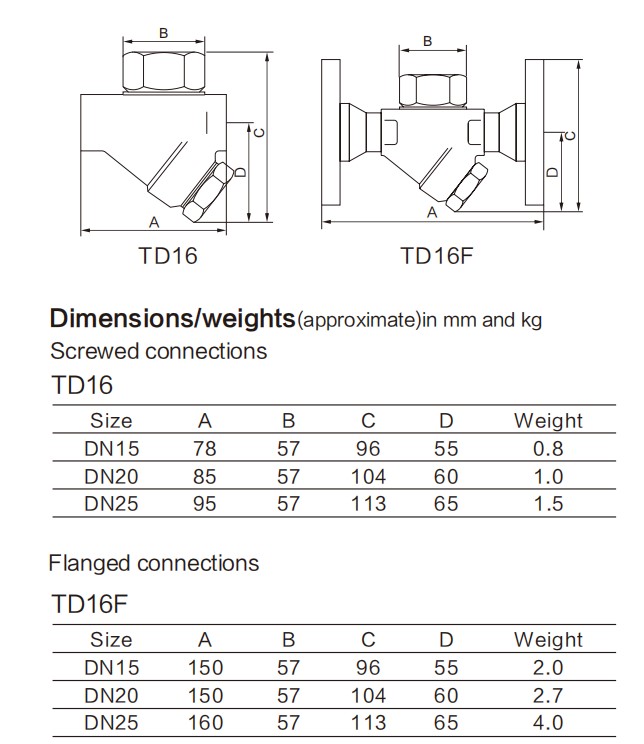
| Nominal Size | DN15 – DN50 (1/2" – 2") |
| Design Pressure | PN16 / PN25 / PN40 |
| Working Pressure | 16 – 40 bar |
| Working Temperature | 220 – 400°C |
| Applicable Media | Saturated Steam, Condensate |
| Surface Finish | Ra ≤ 0.8 μm |
| Standards | DIN / SMS / ISO / 3A |
The stainless steel steam trap is mainly used in the petrochemical, power, paper, and district heating industries. For example, in the main steam pipelines of power plants or large heat exchange stations, it is used for condensate drainage and operational status testing of high-pressure steam pipelines, helping maintenance personnel to judge the drainage condition in a timely manner and ensuring the safe and stable operation of the system.
Working Principles
The stainless steel steam trap achieves automatic drainage through the combined action of a float and a temperature sensing element. When condensate enters the valve body, the float rises with the liquid level, causing the valve core to open and continuously discharge condensate and air. When steam enters, the float loses buoyancy and falls, closing the valve to prevent steam leakage. Simultaneously, a built-in analyzer monitors temperature and discharge status to determine the steam trap's operating condition. This design balances stable drainage with operational monitoring, making it suitable for steam systems with high reliability requirements.
Feature and Specification
| Body Material | SS304 / SS316L Stainless Steel |
| Connection Type | Clamp / Threaded / Welded |
| Nominal Size | DN15 – DN50 (1/2" – 2") |
| Design Pressure | PN16 / PN25 / PN40 |
| Working Pressure | 16 – 40 bar |
| Working Temperature | 220 – 400°C |
| Applicable Media | Saturated Steam, Condensate |
| Surface Finish | Ra ≤ 0.8 μm |
| Standards | DIN / SMS / ISO / 3A |
Features
Integrated wireless monitoring module continuously tracks temperature and discharge behavior, enabling real-time condition analysis without interrupting steam system operation.
Stainless steel construction provides strong corrosion resistance and durability, suitable for high-temperature, high-humidity, and sanitary steam environments.
Analyzer function helps identify normal operation, blockage, or steam leakage, supporting predictive maintenance and reducing unplanned downtime.
3/4 inch compact design allows easy installation on branch lines and process equipment with limited space requirements.
Wireless data transmission reduces manual inspection needs, improving maintenance efficiency and overall energy management performance
Application
The stainless steel steam trap is mainly used in the petrochemical, power, paper, and district heating industries. For example, in the main steam pipelines of power plants or large heat exchange stations, it is used for condensate drainage and operational status testing of high-pressure steam pipelines, helping maintenance personnel to judge the drainage condition in a timely manner and ensuring the safe and stable operation of the system.